
If your home relies on a private well, your pressure tank plays a bigger role than many homeowners realize. It is not just a storage container—it is a key part of how your water system runs smoothly every day. At Bryant’s Pump Service & Well Drilling, we help homeowners understand, maintain, and protect well systems in Ocala so they can enjoy dependable water pressure and fewer unexpected problems.
Your pressure tank works quietly in the background each time you turn on a faucet, start the washing machine, flush a toilet, or run a shower. When it is working properly, you may not think about it at all. When it is not, you may notice short cycling, weak pressure, water hammer, or a pump that seems to run constantly.
What a Pressure Tank Does
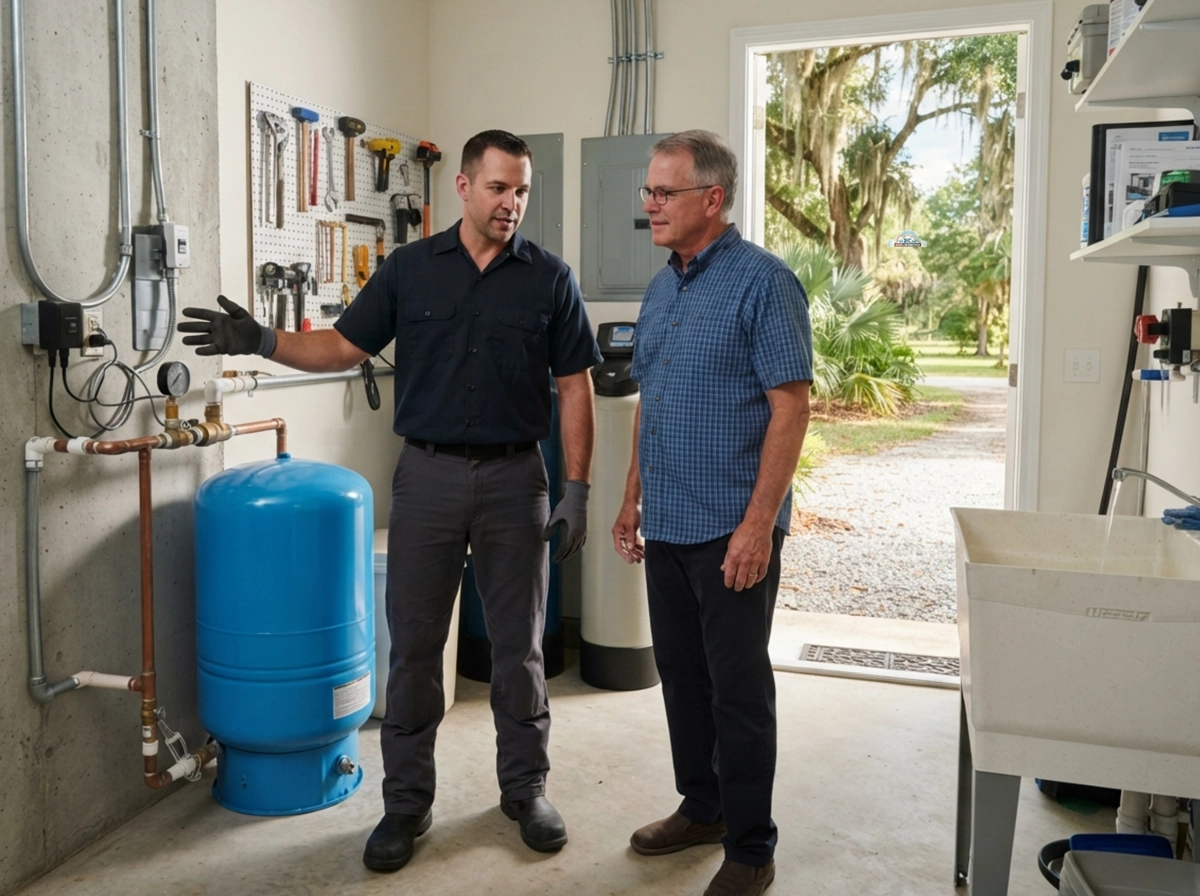
A pressure tank helps regulate the flow of water between your well pump and your home’s plumbing system. Inside the tank, water and compressed air work together to create pressure. As water enters the tank, the air compresses. When you open a faucet, that air pressure pushes water into your plumbing without requiring the pump to turn on immediately.
This gives your system a reserve of pressurized water. Instead of forcing the pump to start every time a small amount of water is needed, the tank supplies water until the pressure drops to a set level. Then the pump turns on, refills the tank, and shuts off once the correct pressure is restored.
How It Protects Your Well Pump
Your well pump is built to move water, but it is not designed to turn on and off constantly. Frequent cycling creates wear on the motor, pressure switch, wiring, and other components. Over time, this can shorten the pump’s lifespan and lead to costly repairs.
A properly functioning pressure tank reduces that strain. Storing pressurized water allows the pump to run in healthier cycles rather than rapid bursts. Think of the tank as a buffer between your household water demand and your pump. When that buffer is missing, undersized, or failing, your pump has to work much harder.
Why Proper Sizing Matters
Pressure tanks are not one-size-fits-all. The right size depends on several factors, including your pump capacity, household water use, plumbing layout, and pressure settings. A tank that is too small may cause the pump to cycle too often. A tank that is too large may not be the best fit for your system’s performance needs or installation space.
At Bryant’s, we consider the entire system before recommending a tank. We consider how your family uses water, how often the pump runs, and whether the current setup is supporting long-term reliability.
Signs Your Pressure Tank May Need Attention
Call a professional if you notice uneven water pressure, clicking from the pressure switch, air spitting from faucets, a pump that runs constantly, or a pump that starts and stops rapidly. These symptoms can point to a failing tank, an incorrect air charge, a damaged bladder, a pressure switch issue, or another well system concern.
The sooner you address pressure tank problems, the better chance you have of protecting your pump and avoiding a larger repair.
Trust Bryant’s for Well System Guidance
Your pressure tank may not be the most visible part of your home, but it is one of the most important for daily comfort and for protecting the pump.
 352-629-3769