
Imagine pouring a glass of water that looks fine, until you notice a weird smell, a metallic taste, or stains creeping across your sinks and laundry. If you rely on a private well, those “small” changes can be the first warning that something in your water (or your well system) has shifted.
Here in Ocala and across Central Florida, groundwater conditions can change with rainfall, drought, well depth, and seasonal patterns. That means problems can show up suddenly, even if everything seemed normal recently. A professional water test gives you a clear snapshot of what’s in your water right now, so you can stop guessing and start fixing the real cause.
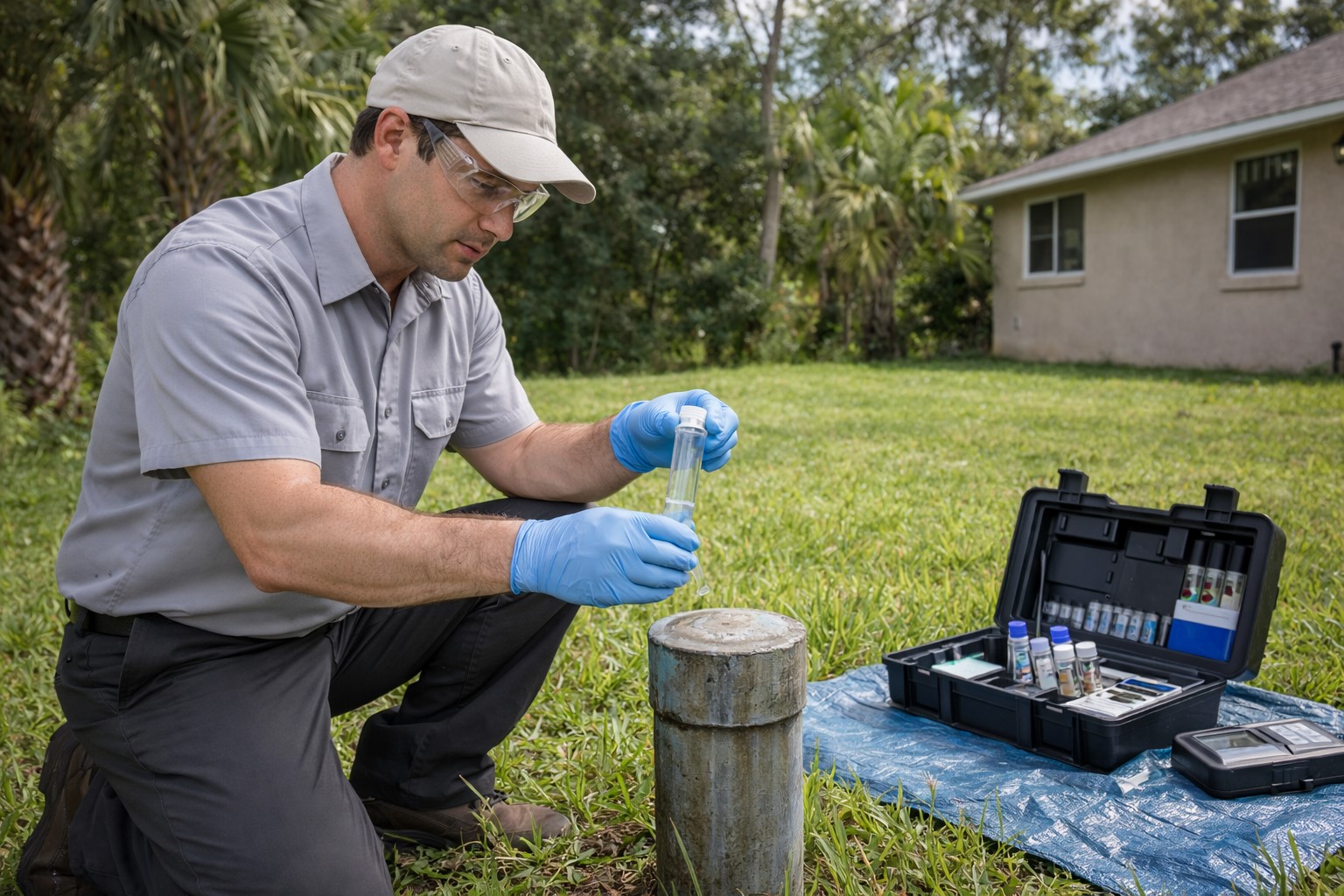
Signs Your Well Water Needs Testing
Below are the most common red flags we see in Ocala and nearby areas like Belleview, Silver Springs, Dunnellon, Summerfield, Reddick, Citra, and Inverness. Because well water can shift quickly, testing is the fastest way to confirm what’s happening and choose the right fix the first time.
Strange odors (especially a “rotten egg” smell)
If your well water smells like rotten eggs, hydrogen sulfide gas or sulfur-related bacteria may be present, and that odor can show up even at low levels, often making it the first sign your water chemistry has changed. Beyond being unpleasant, sulfur conditions can contribute to plumbing stress over time, so the smartest next step is to test first (instead of guessing at a fix) to make sure any treatment matches the true cause; if the odor is strong, spreading to multiple faucets, or returning after it seemed to go away, it’s time to test.
Metallic taste or rust-colored water
A metallic taste or rust-tinted water commonly points to iron (and sometimes manganese) in well water, which can make water unpleasant for drinking or cooking, discolor fixtures and laundry, and create buildup that reduces performance in faucets, showerheads, and appliances. A professional water test confirms what’s present and helps you choose the correct filtration or treatment approach.
Orange/brown stains on sinks, toilets, or laundry
Orange or brown staining often happens when iron (or manganese) oxidizes after it hits air, and over time those stains can become stubborn while also contributing to clogging in aerators and showerheads. Before investing in equipment, test for iron and manganese so the solution is properly sized, and actually solves the problem.
Cloudy water, sediment, or “grit” in faucets
Cloudy water or gritty particles are often caused by sediment intrusion, disturbed well conditions after heavy rain, or issues within the well and pump system, and sediment doesn’t just look bad; it can clog fixtures, accelerate appliance wear, and reduce water clarity throughout the home. Testing and a system check help confirm whether this is purely a water-quality issue or a warning sign your well setup needs attention.
Sudden spike in scale buildup (white crust) on fixtures or appliances
A sudden increase in white crust or scale is often tied to changes in hardness minerals common in groundwater, and that scale can shorten appliance life, leave spots on dishes, and make water heaters run less efficiently. Testing hardness along with related indicators like pH and corrosivity helps ensure any treatment is matched to what your water actually needs.
Skin irritation, dryness, or hair that feels “waxy”
If your skin feels dry or irritated after showering, or your hair feels waxy and hard to rinse, your well water chemistry may have shifted, and factors like hardness, pH imbalance, or other mineral changes can affect how water interacts with skin, hair, and soap. Testing pinpoints the most likely driver so you can fix the cause, not just the symptom.
Water pressure changes plus water quality changes happening together
When water pressure drops at the same time you notice staining, odors, sediment, or other quality changes, the issue may involve both water chemistry and system performance, with mineral buildup, sediment, pump strain, or changing well yield all potentially contributing. Don’t treat it as “just a plumbing issue”, test your water and have the well system checked so you don’t miss the root cause.
After heavy rain, flooding, or nearby construction
After heavy rain, flooding, or nearby construction, groundwater conditions can shift quickly, and even when water still looks normal, contaminants can enter through disturbed pathways or compromised seals. Testing promptly is the safest move, especially after flooding or disruptive site work, and if your area has had flooding or construction nearby, call for water testing right away.
What to Do If You Notice These Signs
Use this checklist to protect your household and avoid turning a “maybe” into a major repair. Acting early helps reduce avoidable damage to your well system, plumbing, and appliances, and brings peace of mind that your water is safe to use.
- Stop drinking the water if you notice a chemical odor, sewage-like smell, or a sudden severe change. Use bottled water until results confirm safety, and contact a qualified water professional.
- Check hot vs. cold: If an odor is only on hot water, the water heater may be contributing (still test, don’t assume). Have a professional inspect the system rather than trying to service the heater yourself.
- Document what changed: Odor, color, staining, pressure, when it started, and whether neighbors notice it too.
- Avoid random filter shopping: The wrong system can waste money and fail to fix the root issue.
- Schedule professional testing so you get accurate results and clear guidance tied to Central Florida groundwater conditions.
How Regular Testing Helps Prevent Expensive Problems
Private wells aren’t routinely monitored like municipal water, you’re in charge of your water safety. A simple, consistent testing routine helps you catch bacteria and nitrate concerns early (especially where septic systems and runoff can play a role), track changes in hardness, iron, sulfur, sediment, and pH as seasons shift, and protect plumbing and appliances by choosing solutions based on measured results, not guesses. Many Florida well-water resources recommend at least annual testing for key contaminants, plus additional testing after major events (like flooding), repairs, or sudden changes in taste, odor, staining, sediment, or pressure.
Ocala well water tip: trust your senses
You can smell sulfur-related odors in water at very low levels. That means your nose may detect changes long before you’d ever “see” a problem.
If you notice that rotten-egg smell getting stronger, showing up in multiple faucets, or returning after it seemed to go away, it’s a strong sign your well water should be tested rather than ignored.
FAQs About Well Water Quality Testing in Ocala, FL
Question: How often should I test my private well?
Answer: Test at least once per year to catch changes you can’t see or taste right away. You should also test after flooding, major repairs, or any sudden change in taste, odor, color, staining, or sediment.
Question: What should I test my well water for first?
Answer: Start with bacteria (total coliform and E. coli) and nitrate, since these are high-priority health checks for private wells. Then add targeted tests based on symptoms or results, such as iron, sulfur, pH, hardness, and sediment.
Question: Is a “rotten egg” smell dangerous?
Answer: Not always, but it often points to sulfur-related conditions that shouldn’t be ignored. Testing confirms what’s causing the odor so you can choose the correct treatment instead of guessing.
Question: Can I rely on store-bought test strips?
Answer: They can be useful for quick screening, but they often miss important issues or get misread. Professional testing provides clearer, more reliable results you can use to choose the right solution.
Question: Should I test after heavy rain or flooding?
Answer: Yes, because heavy rain and flooding can increase the risk of contaminants entering a private well. Testing afterward is a simple safety step, even if the water still looks normal.
Schedule Your Well Water Test in Ocala
For dependable, honest guidance backed by deep local experience, contact Bryant’s Pump Service & Well Drilling to schedule well water testing in Ocala and the surrounding area. We’ll help you pinpoint what’s affecting your water and recommend the right next step based on real results, not guesswork. If you’re dealing with sudden changes, our team is ready to respond quickly and get your system back on track.
Call Bryant’s Pump Service & Well Drilling or use the site’s Schedule Service option to get started.
 352-629-3769