
Imagine turning on your faucet and nothing comes out no water for drinking, cooking, bathing, or cleaning. For many homes, farms, and rural properties around Ocala, a working well pump is the only way to access clean water. When it fails, everything stops.
Well pump emergencies can happen without warning. Electrical failures, worn components, pressure tank problems, and mineral or sediment buildup can all trigger sudden water loss. Acting quickly helps prevent more expensive damage and gets your water back sooner.
At Bryant’s Pump Service & Well Drilling, we’re your trusted partners in protecting your home’s most valuable resource: water. With 24/7 emergency response, family-owned service, and over 20 years of local experience, our team shows up fast, does the work right, and treats every customer like family so you can get back to normal with confidence.
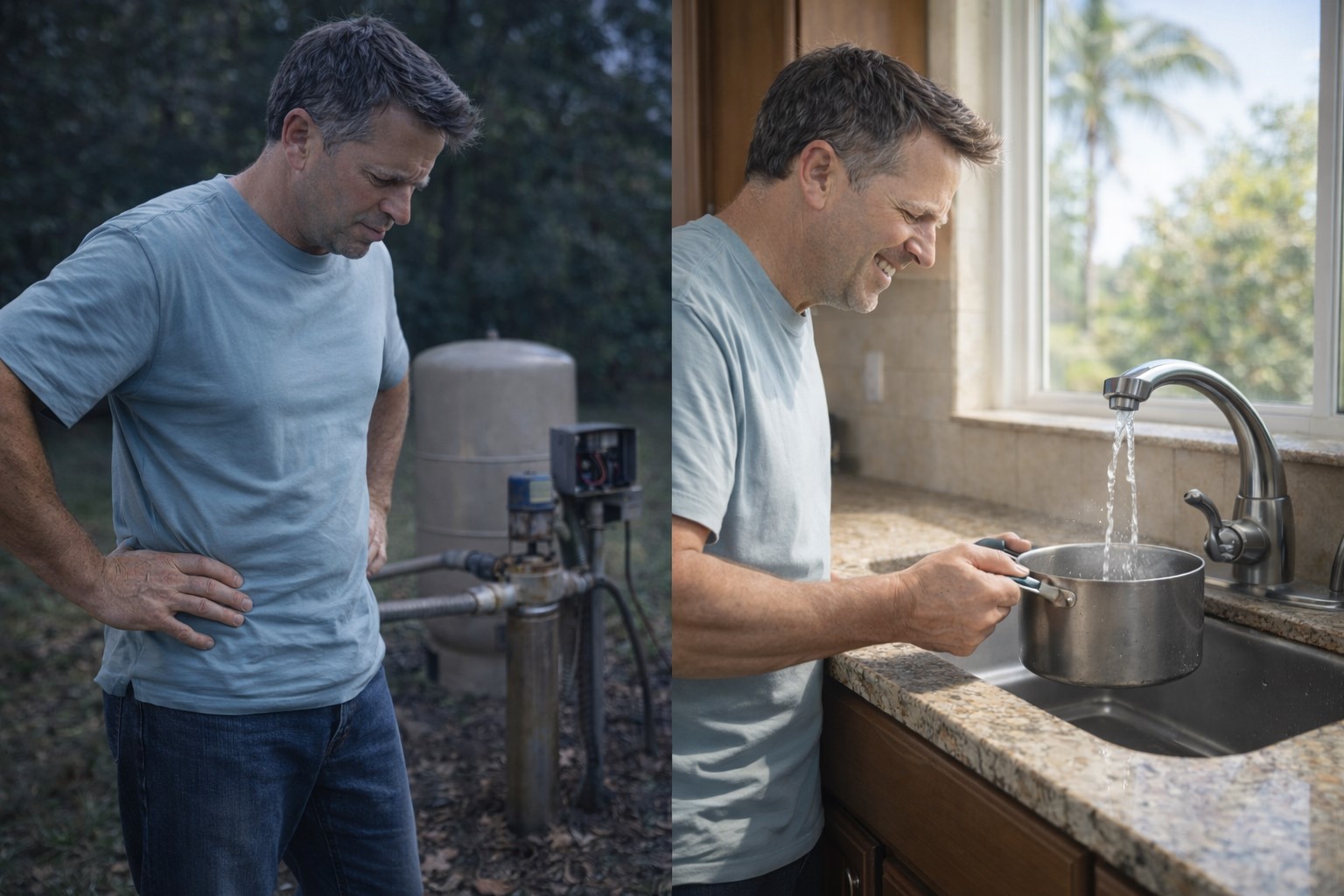
Signs You Need Emergency Well Pump Service
A complete water outage is the most obvious sign of a well pump problem. But many systems show warning signs before a total failure. Catching these early can help you avoid a full shutdown and reduce the chance of damage to your pump, tank, or controls.
No Water From Faucets? Your Well Pump May Have Failed
When a well pump stops working entirely, water won’t flow through your home—meaning no water for daily essentials. Common causes include a burned-out motor, electrical/breaker issues, a failed pressure switch, or a pump that has run dry.
If you suddenly lose all water, don’t delay. A fast diagnosis helps protect electrical components and the pressure tank from additional strain.
Low Water Pressure? Your System Could Be Struggling
Weak or inconsistent pressure is often an early warning sign. Causes may include sediment or mineral buildup, a failing pressure tank, leaking lines, or a pump nearing the end of its lifespan.
Low pressure can move from “annoying” to “urgent” quickly—especially if the underlying issue forces your pump to work harder than it should.
Air or Sputtering Faucets? Your Pump Might Be Pulling Air
If faucets spit air along with water, your well system may be drawing air into the lines. This can happen when the water level drops, a line develops a leak, or the pump begins losing suction.
Left unaddressed, this can lead to full pump failure—and in some cases, raise water-quality concerns.
Dirty or Discolored Water? A Pump or Well Issue Could Be Developing
Cloudy, muddy, or sandy water may mean sediment is entering the system. Possible causes include worn intake screens, damaged pump components, a compromised well casing, or shifting sediment in groundwater.
Because Central Florida aquifers can be mineral-rich, any sudden change in clarity is worth a professional inspection to protect your equipment and your water.
Constantly Running Pump? This Can Burn Out Your System
A pump that runs nonstop is under extreme stress. This often points to a pressure switch problem, a failing pressure tank, an underground leak, or calibration issues that keep the system from reaching proper pressure.
Continuous run time can burn out the motor and turn a repair into a replacement. If you’re seeing no water, rapid pressure changes, air sputtering, dirty water, or a pump that won’t shut off, treat it like an urgent issue—those symptoms tend to worsen fast.
What to Do If Your Well Pump Stops Working
In an emergency, a few basic checks can help you rule out simple problems (like power loss) and give your technician helpful information. Avoid any advanced electrical troubleshooting—well systems combine water and electricity, and the risks are real.
- Check the Power Supply
Confirm whether your home is experiencing a power outage and whether water has stopped everywhere. If the pump appears to have lost power, avoid repeatedly resetting breakers or switches.
If power is on but the pump isn’t running, it’s time for a professional diagnosis.
- Inspect the Pressure Switch
A stuck or failing pressure switch can prevent your pump from turning on when pressure drops. If you hear clicking but the pump doesn’t run, the switch (or related control components) may need repair or replacement.
Because this component is tied into the electrical controls, it’s safest to leave inspection and service to a qualified technician.
- Look for Visible Leaks
Check around the pressure tank, piping, and fittings for pooling water, corrosion, or obvious damage. Even small leaks can cause pressure loss and force the pump to run longer—wearing out the system faster.
- Avoid Running the System Repeatedly
If the pump is malfunctioning, cycling the system on and off can do more harm than good. Constant cycling can accelerate motor damage, create electrical issues, and contribute to pressure tank failure.
If the issue persists after basic observation, stop using the system and call for service.
Keep checks simple and safe—verify power, look for leaks, and avoid repeated resets. Then bring in a pro for a correct fix the first time.
How Regular Maintenance Prevents Emergency Pump Failures
Many well pump emergencies are preventable with routine inspections and maintenance. A simple checkup can catch small issues—like pressure tank wear, sediment buildup, or early electrical problems—before they turn into a no-water emergency. For Ocala-area homes and properties that rely on well water every day, proactive service helps keep your system running reliably and reduces the risk of costly breakdowns.
Professional maintenance helps:
- Identify worn pump components before they fail
- Maintain proper pressure tank performance
- Remove sediment buildup that affects efficiency
- Catch electrical or control issues early
- Extend the overall lifespan of your well system
Routine maintenance also protects water quality and keeps your system running efficiently year-round.
Well System Fact for Ocala Homeowners
Central Florida’s heavy rainfall and mineral-rich groundwater can put extra stress on well systems. Over time, these conditions may accelerate sediment buildup and put added strain on pumps, pressure tanks, and filtration components. Regular inspections help spot pressure changes and sediment issues early—before they turn into bigger failures.
FAQs About Emergency Well Pump Service in Ocala, FL
Question: How much does emergency well pump repair cost in Ocala?
Answer: Emergency well pump repair costs in Ocala often range from about $200 to $800 for smaller repairs, while major repairs or full pump replacement can range from roughly $1,000 to $3,500 or more depending on the system. The best way to get an accurate price is to have Bryant’s Pump Service & Well Drilling inspect the issue and recommend the right solution.
Question: How quickly can a well pump be repaired?
Answer: Many emergency well pump problems can be diagnosed and repaired the same day when addressed quickly. The repair timeline depends on the cause of the failure, the type of pump system, and how easily technicians can access the equipment.
Question: Should I repair or replace my well pump?
Answer: If your well pump is relatively new and the issue is minor, repairing the system is usually the most cost-effective solution. However, older pumps that experience frequent breakdowns may be better replaced to improve reliability and efficiency.
Question: How long do well pumps typically last?
Answer: Most residential well pumps last between 8 and 15 years depending on usage, water quality, and overall maintenance. Regular inspections and proper system care can help extend the life of the pump and prevent premature failure.
Question: What are the most common signs of well pump failure?
Answer: Common warning signs of well pump failure include losing water completely, experiencing low water pressure, or noticing air sputtering from faucets. Homeowners may also see dirty or sandy water or notice the pump running constantly without shutting off.
Fast Emergency Well Pump Service in Ocala, FL
When your well pump fails, every minute matters. Without water, daily life quickly becomes impossible.
Homeowners throughout Ocala and Central Florida count on Bryant’s Pump Service & Well Drilling for fast troubleshooting, dependable repairs, and solutions that last—delivered with clear communication and honest workmanship.
If your well pump suddenly stops working, call us anytime for 24/7 emergency response or schedule service to restore your home’s water supply quickly and safely.
 352-629-3769